

Fatty acids: Some basic concepts to help you understand them better


What are fatty acids?
Today, it's biochemistry!
Here are some concepts that will help you understand what different fatty acids are, a class of lipids. This article is not exhaustive and its purpose is to provide some relatively simple basics.
What is the definition of a fatty acid?
" Fatty acids are carboxylic acids with a saturated or unsaturated hydrophobic aliphatic chain. "
What is there to know about fatty acids?
Fatty acids are molecules, made up of carbon atoms (this is the carbon chain, which is more or less long), saturated by hydrogen atoms, and possessing an acid group (COOH) at one of their ends.
One of their main characteristics is that they are insoluble in water.
They are found in vegetable oils and animal fats.
The carbon chain can be more or less saturated. Total saturation occurs when the carbon atoms are bonded with the maximum number of hydrogen atoms (4 possible bonds for 1 single carbon atom), which leaves the possibility of being bonded to a neighboring carbon with only one single bond.
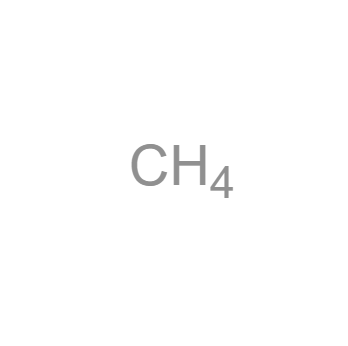

Above, a carbon atom completely saturated with hydrogen


Above are two carbon atoms saturated , linked together by a single bond
Unsaturation occurs when carbon atoms are not bonded with the maximum number of hydrogen atoms.
This leads to the creation of double bonds between carbon atoms, which changes their properties and their 3D structure.


Above are two carbon atoms unsaturated , linked together by a double bond
What are the different categories of fatty acids?
To identify the different families of fatty acids, we note the first carbon starting from the terminal C. That is to say, for an omega-3, we will be at n-3 (!) and therefore the first unsaturation will be on the 3rd carbon from the terminal C.
Due to varying degrees of unsaturation, several "families" of fatty acids are identified:
- Saturated fatty acids (totally saturated carbon chain)


Above is palmitic acid, a saturated fatty acid
- Monounsaturated fatty acids (omega-7 and omega-9, whose carbon chain has an unsaturation). Among these fatty acids is oleic acid, a major constituent of olive oil. The characteristics and intake of monounsaturated fatty acids are detailed in This item .


Above is oleic acid, a monounsaturated fatty acid in n-9 (Omega 9)


Above is palmitoleic acid, a monounsaturated fatty acid in n-7 (Omega 7)
- Polyunsaturated fatty acids (omega-3 and omega-6, whose carbon chain has multiple unsaturations) are particularly important for the body's functions. They are precursors to many molecules. Among them, some are considered essential and must therefore be obtained through diet. We discuss polyunsaturated fatty acids in more detail in this article . The main source of essential polyunsaturated fatty acids is oily fish, which can be problematic for vegetarians and vegans. However, solutions are available, as explained in this article and in this ingredient information sheet .

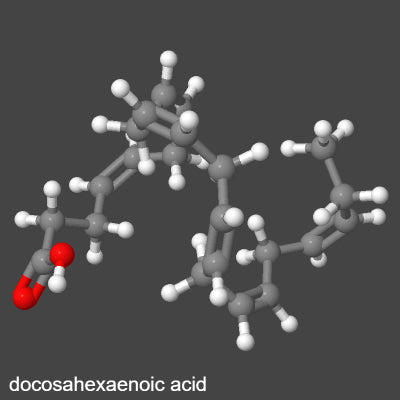
Above, the famous DHA (docosahexaenoic acid), an n-3 polyunsaturated fatty acid (Omega 3)


Above, linoleic acid, a polyunsaturated fatty acid in n-6 (Omega 6)
Note that in oils there are only a few "free" fatty acids (if the amount of free fatty acids increases, the oil is said to become more acidic and lose quality), they are in the form of glycerides, that is to say they are linked to a glycerol molecule.

Above, an example of the formula of a triglyceride consisting of 3 molecules of palmitic acid linked to a glycerol.
What are the roles of fatty acids?
Fatty acids (lipids) contribute to energy production. They are the most energy-rich nutrients, providing 9 kcal per gram. Furthermore, in the form of triglycerides, they are the body's preferred form of energy storage.
Fatty acids also play a role in the formation of cell membranes. Depending on their degree of unsaturation, they help to modulate membrane fluidity.
Some are precursors of other molecules that allow the regulation of different functions of the body (inflammation, etc.).
Finally, they also play roles in the expression of certain genes.